
熱門時事分享:真假難辨成日常?AI 垃圾如何逐漸侵蝕整個網路|20251223
目錄
2025 年 12 月 23 日|HOT 用英文聊時事|S1 EP6
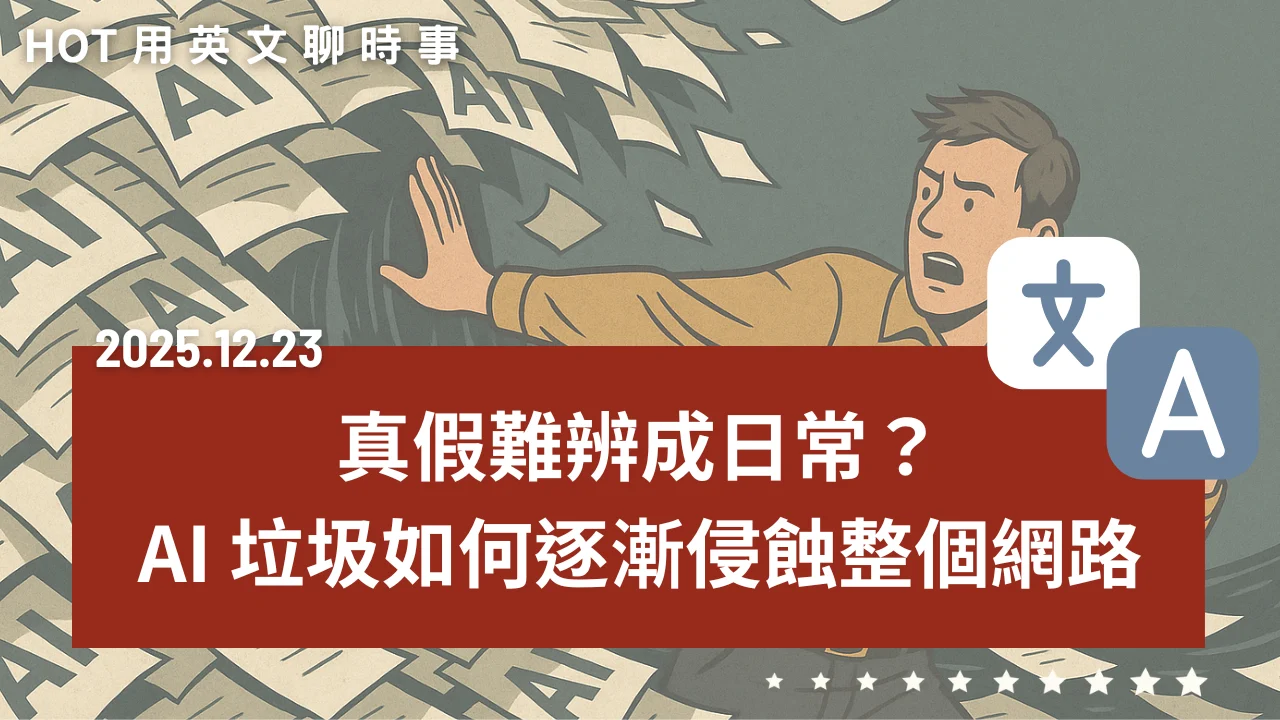
歡迎收聽《HOT 用英文聊時事》。你有沒有發現,網路本應提升資訊取得效率,現在卻越查越讓人困惑,大量內容看似完整,仔細一看卻高度相似、漏洞百出,這反映的其實是 AI 垃圾汙染的擴散。研究顯示,網路上 AI 生成文章比例於 2024 年飆升至 40%,另一方面,模型反覆使用自己生成的內容,只要 250 份惡意文件就能毒害模型,這些變化正在侵蝕著網路生態,動搖我們對資訊與網路的信任。今天,就讓我們來聊聊 AI 垃圾的問題和背後成因,以及面對認知混亂與真假難辨,我們又該如何應對。
Welcome to “Hot English Topics.” Have you noticed that the internet was supposed to make information easier to find, but now it often causes more confusion? Many articles look complete, yet they are very similar and contain many mistakes, showing how AI slop is spreading. Research shows that in 2024, AI generated articles already made up 40 percent of online content. Models also reuse their own output, and only 250 malicious files can harm a model and affect its accuracy. These changes are damaging the online ecosystem and weakening our trust in information. Today, we will look at the problems behind AI slop, why it appears, and how we can respond when information becomes hard to verify.
許多企業積極導入 AI 工具,但實際效果讓人大失所望,AI 讓內容產出變得容易,卻也助長了敷衍了事的風氣,形成生產力假象,產出的人省時間,接收的人反而花更多時間善後。根據調查,有 40% 的全職美國員工曾收到品質不佳的內容,平均需將近兩小時才能釐清,甚至需要重寫,嚴重拖慢流程,當同事經常產出低品質內容,也影響到同仁間的專業信任,進而降低合作意願。更有研究指出,在擁有 1 萬名員工的企業中,這些低品質內容每年可能造成高達 900 萬美元的損失,形成額外的隱形成本。
Many companies are using AI tools, but the results are often disappointing. AI makes content easy to produce, yet it also leads to careless work and creates an illusion of higher productivity. The creator saves time, but others spend more time fixing the problems. A survey shows that 40 percent of full-time employees in the United States have received poor-quality content. They need almost two hours to clarify or rewrite it, which slows down the workflow. Frequent low-quality output also harms trust among coworkers and reduces their willingness to work together. Research also shows that in a company with ten thousand employees, low-quality content can cause up to nine million dollars in losses each year and create extra hidden costs.
現在網路上的 AI 垃圾擴散得非常快,而受影響最深的,就是靠原創內容維生的創作者。以 Google 搜尋頁上方的 AI 摘要功能為例,直接稀釋了原本依賴搜尋曝光的流量,點閱和收入大幅下滑,甚至有美國媒體控告 Google,其網站流量和收益因為 AI 生成內容衝擊,減少了三分之一以上。同時,AI 模型需要大量網路數據進行訓練,其中包含受版權保護的文字、圖像與音樂等素材,在未經同意或付費的情況下使用這些作品,是否構成侵權,也成為法律爭議。除了流量和版權問題,AI 幻覺常常憑空捏造資訊,高達近八成錯誤資訊會變成使用者的記憶,侵蝕著大眾對網路內容的信任與判斷力。AI 垃圾擴散對創作者來說,是流量與收益的損失,對閱聽者而言,則是資訊亂象、錯誤內容擴散的危機。
AI slop is spreading quickly online, and creators who rely on original work are the most affected. Google’s AI summaries reduce search traffic, causing big drops in views and income, and some U.S. media have sued Google after losing more than one third of their traffic. AI models also need large amounts of online data, including copyrighted text, images and music. Using these works without permission or payment has led to legal questions about whether it breaks copyright rules. Besides traffic and copyright issues, AI hallucinations often create false information. Almost 80 percent of this misinformation can stay in users’ memory, which reduces public trust and weakens judgment. The spread of AI slop means a loss of traffic and income for creators, and for audiences it becomes a problem of information confusion and more incorrect content appearing online.
AI 垃圾之所以會失控,是因為現在的模型多半追求速度和產量,而不是品質和原創性。大型語言模型依靠「機率」預測產生文字,很多時候語句流暢卻未必正確,缺乏答案時還會捏造資訊,而當產出的錯誤內容又被當成新的訓練資料,模型用的詞彙和句型會越來越單一,語義變得不精準,久而久之輸出品質下降,訓練數據逐漸受到污染。不僅如此,現行社群平台以點擊率、互動量與廣告收益為導向,獎勵吸睛的內容,因 AI 生成成本極低,加速了劣質內容被製造與散播的機會,最終形成惡性循環,造成「模型崩潰」。
AI slop grows out of control because many models focus on speed and output instead of quality and originality. They predict the next word, so the text may sound smooth but can be wrong, and when the model has no answer, it creates information that is not real. When these mistakes are reused as training data, the model’s vocabulary becomes limited and its meaning becomes less accurate, which lowers output quality and harms the data. Not only that, but social platforms today are driven by clicks, engagement and advertising income, which reward attention grabbing content. Since AI is very cheap to use, it increases the amount of low quality material created and shared. This cycle can eventually lead to model collapse.
面對 AI 的快速發展,各國都在思考同一件事,如何在鼓勵創新的同時,把風險控制在可接受的範圍內。歐盟的《人工智慧法》是全球第一部全面性的 AI 專法,採用風險分級管理,明確禁止利用 AI 操控人們的潛意識、影響弱勢族群,或造成重大危害人類的應用。AI 的判斷並不完全客觀,可能受社會偏見或開發者主觀影響,演算法偏見導致歧視決策產生,因此各國都強調,研發和使用必須要符合「公平性」原則。隨著深度偽造與假訊息變多,歐盟和美國政府也試圖透過「資料探勘」與「合理使用」等法律制度,保護創作者的著作權,藉由數位浮水印標記,讓人更容易辨識資訊來源。然而,即使制度一直在更新,還是跟不上技術變化,一旦出現問題,國際共識也表明,責任應由相關人員承擔,而不是歸咎給 AI。
As AI develops quickly, countries around the world are thinking about how to support innovation while keeping risks at a safe level. The EU Artificial Intelligence Act is the first full law made for AI and uses a risk based system. It clearly bans AI that tries to influence the subconscious, harm vulnerable groups or applications that could cause serious harm to humans. AI decisions are not completely objective because they can be affected by social bias or the views of developers. These algorithmic biases may lead to unfair or discriminatory results, so many countries stress that AI development and use must follow the principle of fairness. As deepfakes and misinformation grow, the EU and the United States are using laws such as data mining rules and fair use to protect creators’ copyrights. They also use digital watermarking to help identify information sources. Still, these systems cannot keep up with fast technological change. When problems occur, the international view is that responsibility should be taken by the people involved, not by the AI system.
AI 垃圾滿天飛的時代,我們更需要保持批判思考,養成內容查證比對、跨平台確認的習慣,開始建立自己的知識庫,整理重要知識、工作流程、判斷依據,讓 AI 工具真的能提高協作效率。產出內容時加入自己的見解和故事,以朗讀的方式修正語氣及邏輯缺陷,維持作品的「人味」。而企業則可以採取兩階段審核機制,先由 AI 快速產出,再由更強大的模型檢查品牌語氣與敏感資訊,避免輸入機密資料,若是高風險工作仍需要人工把關,確保員工對輸出內容負責。同時,企業也要強化員工的資安意識,視需求建立內部 AI 系統或以 API 串接替代,讓團隊學習怎麼安全有效使用工具。
In a time when AI slop is everywhere, we need to keep our critical thinking skills and get used to checking information across platforms. We should build our own knowledge base by organizing key ideas, work steps and reasons for decisions so AI tools can truly support our work. When creating content, adding our own thoughts and stories and reading it aloud can help us fix tone and logic problems and keep a human touch. Businesses can use a two-stage review system. AI first produces a quick draft, and a stronger model checks the brand tone and sensitive information while avoiding confidential data. High-risk tasks still need human review to ensure that employees take responsibility for the final output. Companies should also strengthen employees’ cybersecurity awareness and, when needed, build internal AI systems or use API tools to help teams learn to use AI safely and effectively.
AI 垃圾時代全面來臨,相關規範制定遠遠追不上科技發展。生成式 AI 的高速產出、商業流量誘因與模型污染,使垃圾內容不斷蔓延,影響資訊可信度,也直接侵害到創作者權益。在這樣的環境下,不論是企業還是個人,都需要有一套防禦策略,我們必須學會更快辨識、篩選與管理內容和數位工具應用,才能在資訊污染加劇的時代,守住品質與信任。
The era of AI slop has arrived, and rules cannot keep up with fast technology. The rapid output of generative AI, online traffic incentives and model pollution all help junk content spread. This hurts information credibility and harms creators’ rights. In this situation, businesses and individuals need a defense strategy and must learn to identify, filter and manage content and digital tools to protect quality and trust.
本集節目由 CLN 製作播出,若你喜歡這種主題與雙語內容,歡迎追蹤我們、給我們五顆星,並分享給對 AI 數位垃圾汙染或學英文有興趣的朋友。也告訴我們下次想聽的主題吧!我們下次見!
This podcast is produced by CLN. If you enjoyed this bilingual episode, please follow, rate us five stars, and share with friends interested in AI content pollution, or English learning. Tell us what topic you want next. See you again soon!
歡迎至各大平台搜尋《HOT 用英文聊時事》,立即收聽最新集數!
每天早上八點更新,用簡單易懂的英文來講解最新的熱門、商業及趣味新聞,讓你輕鬆跟上時事,還能在社交場合侃侃而談,穩步提升英文實力!
本節目由【CLN (Corporate Language Network)|外語服務與培訓領導品牌】製作播出。
CLN 英文一對一:https://cln-asia.com/1on1/
CLN 企業英文培訓:https://cln-asia.com/corporate-training/
追蹤 IG:@hotenglishnews
追蹤 FB:HOT基礎英文新聞 HOT English News
—— CLN 團隊 帶你看懂新聞,提升英文
 www.cln-asia.com
本文由 CLN 編輯團隊的資深專家協力撰寫與審定。我們的團隊成員不僅畢業於台灣頂尖大學的商管、語文及教育相關系所,更在跨國企業、顧問諮詢、與人才發展領域,具備多年的實務與管理經驗,致力於將深厚的產業洞察轉化為兼具專業性與實用性的職場解決方案。
本站所有文章,歡迎自由分享網址連結並註明出處。但未經授權,請勿任意利用或直接複製、轉載文字內容。
關於 CLN
CLN (Corporate Language Network) 創辦於 2014 年,是亞洲企業外語服務和培訓的領導品牌,旨在解決企業因外語所衍伸的相關問題,協助客戶成為具有跨文化溝通和國際合作能力的專業人士。我們提供一流的企業教育訓練、AI 學習工具、隨選隨上家教平台、文件翻譯、會議口譯、師資訓練等專業服務。這些年來,我們的合作廠商包含 Google、Yahoo、IBM、IKEA、Mercedes-Benz、聯發科等多家國際品牌。
Since 2014, CLN (Corporate Language Network) has delivered language training and cross-cultural communication services for companies across Asia, including brands such as Google, IKEA, and MediaTek.